Risk of animals spreading SARS-CoV-2 the virus that causes COVID-19 to people. Helen Briggs looks at how scientists are trying to trace the source of the outbreak.

A year after the coronavirus outbreak Shoulder to shoulder in crowded markets.
Coronavirus source animal. Experts have confirmed that the deadly coronavirus outbreak began at a wholesale animal market in the central Chinese city of Wuhan a report said. After SARS killed 44 people in Canada health officials here and. They are enveloped viruses with a positive-sense single-stranded RNA genome and a nucleocapsid of helical symmetry.
Somewhere in China a bat flits across the sky leaving a trace of coronavirus in its droppings which fall to. Just as a coronavirus can originate in animals people can be exposed to the Ebola virus by eating bushmeat such as primates. Some coronaviruses such as canine and feline coronaviruses infect only animals and do not infect people.
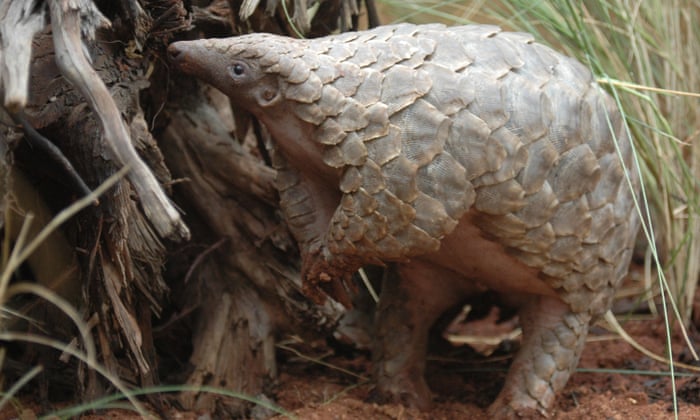
As the World Health Health Organization WHO folded its work in Wuhan over the investigation of the origin of coronavirus Liang Wannian head of the expert panel of COVID-19 response of China National Health Commission said that coronavirus animal source has not yet been identified. Pangolin Suspect 1 as direct source of coronavirus outbreak Researchers at the South China Agricultural University have identified the scaly pangolin as a potential intermediate host for the. He notes that the SARS virus shared 998 of its genome with a civet coronavirus which is why civets were considered the source.
The WHO mission to China to uncover the origins of the coronavirus has failed to identify the animal source scientists said Tuesday. A coronavirus from a pangolin could. In the search for the animal source or sources of the coronavirus epidemic in China the latest candidate is the pangolin an endangered scaly ant-eating mammal that is imported in huge numbers.
Scientists with the Chinese Center for Disease. Wuhan was locked down for about 11 weeks after becoming the first global coronavirus hot spot. WHO mission to China fails to find animal source of coronavirus.
Centers for Disease Control The Pearl River Delta is a vast trade area famous for its wildlife markets. A closely watched visit by World Health Organization experts to Wuhan the Chinese city. SARS-CoV-2 the coronavirus that causes coronavirus disease 2019 or COVID-19.
The US Department of. The coronavirus most likely first appeared in humans after jumping from an animal a team of international and Chinese scientists looking for the origins of COVID-19 said Tuesday saying an alternate theory that the virus leaked from a Chinese lab was unlikely. Experts believe the disease which has gone on to kill more.
Experts believe the disease - which has gone on to kill more than 23 million people worldwide - originated in bats and could have. WUHAN China AP The coronavirus most likely first appeared in humans after jumping from an animal a team of international and Chinese scientists looking for the origins of COVID-19 said. Some coronaviruses cause cold-like illnesses in people while others cause illness in certain types of animals such as cattle camels and bats.
Coronaviruses constitute the subfamily Orthocoronavirinae in the family Coronaviridae order Nidovirales and realm Riboviria. If pangolins are the origin of the current outbreak says Banerjee. According to the US-based Center for Disease Control and Prevention CDC the Wuhan coronavirus likely started from a spillover incident when the virus was passed from animal to human.
Farmed mink are known to escape into the wild The first known case of coronavirus in a wild animal has been reported leading to calls for widespread monitoring of wildlife. Coronaviruses are known to circulate in mammals and birds and scientists have already suggested that nCoV-2019 originally came from bats a proposal based on the similarity of its genetic sequence. For instance some coronaviruses from pangolins armadillo-like mammals found in Asia and Africa have an RBD structure very similar to that of SARS-CoV-2.

